FROM THE EDITOR
Introduction. The journal "Pharmacokinetics and Pharmacodynamics", published since 2004, has evolved from a narrowly focused periodical on clinical pharmacokinetics to a reputable peer-reviewed journal included in the Supreme Attestation Commission list (K1), in the Unified State List of Scientific Publications — "White List" (level 2) and the DOAJ database. The challenges in the area of modern medicines development require a revision of editorial policy and an expansion of thematic boundaries.
Objective. To present a strategic vision for the journal's development, aimed at transforming the publication into an interdisciplinary platform covering the entire lifecycle of a medicinal product — from molecular design to clinical application.
Key points. The strategy is based on three key vectors: 1) institutional — renewal of the editorial board, change of the editor-in-chief, and formation of an international editorial council; 2) thematic — integration of related specialties (1.4.16. Medicinal Chemistry, 3.3.6. Pharmacology, Clinical Pharmacology, 3.4.1. Industrial Pharmacy and Medicines Manufacturing Technology, 3.4.2. Pharmaceutical Chemistry, Pharmacognosy) to create a unified publication logistics chain; 3) international — rebranding with a possible name change to position the journal as a global player in the field of translational pharmacology and pharmaceutical sciences, including submission to Scopus and PubMed Central.
Conclusion. The implementation of this concept will dramatically expand the pool of authors, increase citation rates, and secure a leading position among national and international pharmaceutical journals, becoming the main integrator of scientific knowledge in the field of innovative drug development.
REVIEWS
The use of genetic animal models plays a critical role in understanding the origin and biology of neuroinflammation and requires the involvement of pharmacology, neurobiology, immunology, and genetic engineering. Genetic models are crucial for mimicking particular molecular pathways of neuroinflammation and understanding the causal relationship between genotype, pathology, and behavior, that are impossible in postmortem or preclinical studies.
Nowadays the majority of strategies for creating genetic models focused on reproduction of certain pathological processes — transgenic models with mutant form of human amyloid precursor protein (APP) or the presenilin 1 (PS1) gene (e.g. APP/PS1, 5xFAD, 3xTg-AD, PDAPP, APP23, Tg2576), transgenic models expressing human tau-protein (e.g. rTg4510, PS19, P301S), models targeting CNS immune cells (e.g. CX3CR1-GFP/+, hM3Dq/hM4Di (DREADD), Trem2 ko), and transgenic animal models with proinflammatory phenotype (e.g. IL-1βXAT, overexpression of p25, knockout of nerve growth factor (NGF)).
PRECLINICAL PHARMACODYNAMICS STUDIES
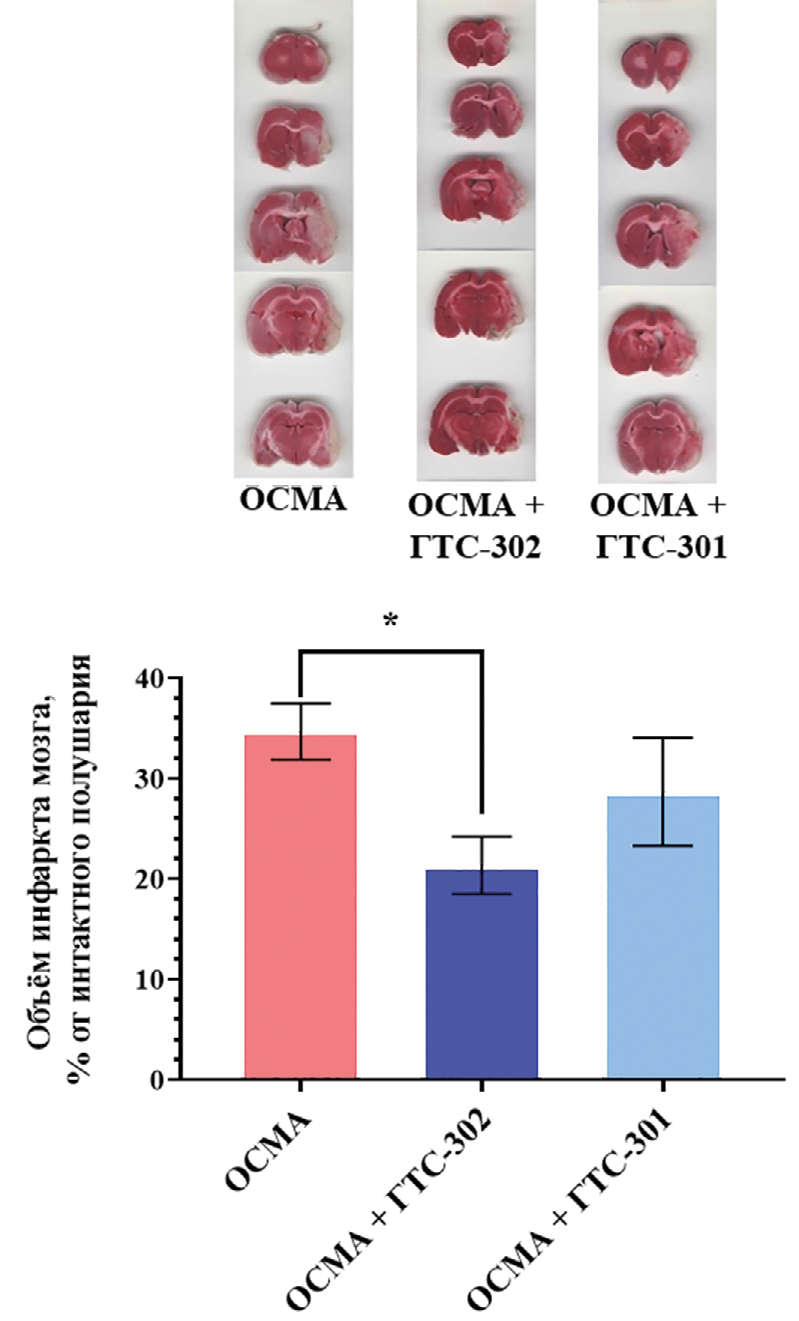
Stroke is a leading cause of mortality and disability worldwide, so the development of new agents for its pharmacotherapy remains highly relevant. The proteins of the neurotrophin family (NGF, BDNF, NT-3, NT-4) act as endogenous neuroprotectors and promote neuroregeneration. Issues related to the clinical application of neurotrophins (low bioavailability, risk of side effects) may be overcome by creating pharmacologically suitable low-molecular-weight mimetics. In the Federal Research Center for Innovator and Emerging Biomedical and Pharmaceutical Technologies, two dimeric dipeptide mimetics of NT-3 compounds GTS-301 (bis-(N-monosuccinyl-L-asparaginyl-L-asparagine) hexamethylenediamide) and GTS-302 (bis-(N-γ-hydroxybutyryl-L-glutamyl-Lasparagine) hexamethylenediamide) were designed and synthesized based on the β-turn of the 4th loop of NT-3.
The objective of the present study was to identify the potential neuroprotective activity of GTS-301 and GTS-302 using a rat model of ischemic stroke induced by middle cerebral artery occlusion (MCAO). The dipeptides were administered intraperitoneally at a dose of 1 mg/kg for 7 days, with the first injection occurring 4 hours after MCAO modeling. Neurological status was measured on days 3 and 6 using a limb-placing test, and brain infarct volume was recorded on day 7 via morphometry of 2,3,5-triphenyltetrazolium chloride stained sections.
It was established that GTS-302 reduces brain infarct volume by 39 % compared to untreated animals and statistically significantly improves neurological status on day 3 after MCAO. Compound GTS-301 was inactive. The differences in the activity of the studied compounds in the MCAO model may be attributed to the fact that, as previously determined in vitro, GTS-302, similarly to full-length NT-3, activates all major signal transduction pathways of neurotrophin Trk receptors (PI3K/Akt, MAPK/ERK, and PLC-γ1), whereas GTS-301 activates only MAPK/ERK and PLC-γ1.
The data obtained in this study, along with results from our previous investigations of the neuroprotective activity of NGF and BDNF dipeptide mimetics under the same conditions, indicate the importance of PI3K/Akt pathway activation for the manifestation of neuroprotective activity by neurotrophin dipeptide mimetics in the MCAO model.
Introduction. Evaluating the ability of novel antitumor compounds to arrest specific phases of the cell cycle is a key step in their preclinical characterization for chemotherapeutic application. The synthesized compound 2-isobutyl-4,6-dimethyl-5-oxypyrimidine in salt (CHK-578) form, have demonstrated antitumor and antimetastatic efficacy in models of Lewis lung carcinoma and B16 melanoma.
Objective. To evaluate the effects of CHK-578 in comparison with doxorubicin (DOX) on the cell cycle phases of Jurkat cells.
Materials and Methods. Experiments were conducted on Jurkat cell line (a lymphoblastic leukemia cell line). After 24and 48-hour incubation with DOX (10-5 M) or CHK-578 (10-4 M and 10-5 M), the cells were stained with a propidium iodide solution containing RNase A, followed by cell quantification using flow cytometry.
Results. Culturing Jurkat cells with DOX or CHK-578 (10-4 M) for 48 hours revealed an increase in the proportion of cells in the G₁ phase of the cell cycle and a decrease in the proportion of cells in the S phase.
Conclusions. Using the Jurkat cell line culture, it was established that CHK-578, similar to DOX, affects DNA synthesis in the S phase of the cell cycle. The obtained data confirm the possibility of enhancing the antitumor effect with the combined use of CHK-578 and DOX, which was previously observed in in vivo model experiments.
This article presents literature and our own data on animal models of ischemic and hemorrhagic stroke, using in vivo and in vitro methods. Stroke models are reviewed, including focal ischemia, global complete or transient cerebral ischemia, and combined vascular pathologies. The advantages and disadvantages of experimental models and the mechanisms underlying the consequences of ischemic and hemorrhagic brain injury are discussed.
Background. Inflammation intensifies lipid peroxidation and damages cell membranes. Therefore, the use of antioxidant and membrane-protective agents in combination with widely prescribed nonsteroidal anti-inflammatory drugs (NSAIDs) can enhance the effect of the therapy. Ethylmethylhydroxypyridine succinate (EMHPS), which has antioxidant and membrane-stabilizing properties, enhances the antiexudative effect of diclofenac sodium and etoricoxib after a single oral administration in rats and mice.
Objective. Evaluation of the effect of EMGPS, diclofenac sodium, etoricoxib and combinations of these NSAIDs with EMGPS with a course of oral administration in a collagen-induced arthritis model (CIA) in BALB/c mice.
Methods. CIA was modeled by double injection of bovine collagen type II (BC) emulsified with complete Freund's adjuvant into the base of the tail of BALB/c mice, 21 days apart. Arthritis severity, paw edema, hyperalgesia, and motor deficits were recorded. On day 21 after the 2nd BC injection, serum was obtained for evaluation of the concentration of the collagen degradation marker oxyproline and the activity of the antioxidant enzymes catalase and glutathione peroxidase. NSAIDs at a dose of 1 mg/kg, EMHPS at a dose of 25 mg/kg, and combinations of EMHPS with NSAIDs were administered orally daily, starting on day of the 2nd BC injection for 21 days.
Results. Mice with CIA developed swelling of the paws, the maximum of an exudative inflammation was observed on days 4–17 after the 2nd injection of BC, then joint deformation was more pronounced, and the concentration of oxyproline in the serum increased. Diclofenac sodium had an antiexudative effect on the 7th day of its administration. Etoricoxib delayed the manifestation of symptoms of arthritis in animals, had an antiexudative effect on the 7th day of its administration, but increased the concentration of oxyproline in serum. EMHPS delayed the manifestation of symptoms of arthritis and reduced the concentration of oxyproline in serum. EMHPS when administered together with diclofenac sodium or etoricoxib had a corrective effect on the severity of symptoms of arthritis and reduced swelling on the 7th day of its administration. EMHPS when administered together with diclofenac sodium or etoricoxib but not NSAIDs and EMHPS per se reduced hyperalgesia on the 7th day of its administration. EMHPS when administered together with diclofenac sodium reduced the level of oxyproline, and when administered with etoricoxib, it prevented the increase in oxyproline level in the serum caused by etoricoxib.
Conclusion. The combined use of EMHPS with diclofenac sodium and etoricoxib increases the effect of these NSAIDs in the collagen-induced arthritis model in BALB/c mice.
PRECLINICAL PHARMACOKINETIC STUDIES

Relevance. BCRP (Human Breast Cancer Resistance Protein) (ABCG2, MXR; ABCP) is an efflux ATP-dependent transporter protein that plays a crucial role in the pharmacokinetics of a wide range of drugs. To enhance therapeutic safety and predict potential pharmacokinetic drug-drug interactions, international regulatory bodies recommend testing medicinal substances for their affiliation with substrates and inhibitors of BCRP. Preclinical studies are primarily conducted using cell lines that overexpress BCRP in vitro.
Objective. The aim was to develop and experimentally validate a methodology for assessing medicinal substances as substrates or modulators of BCRP activity in vivo.
Materials and methods. Six sexually mature male rabbits of the Soviet Chinchilla breed, weighing between 3000 g and 4000 g, were used in this study. Sulphasalazine was chosen as the classical substrate for BCRP and was administered intragastrically at a dose of 125 mg/kg. Pharmacokinetic evaluation involved blood sampling from ear veins at time points 0.25 h; 0.5 h; 1 h; 1.5 h; 2 h; 3 h; 5 h; 8 h; 12 h; and 24 h post-administration. Quercetin, known as a potent inhibitor of the transporter, was also administered either as a single dose (100 mg/kg) or chronically (25 mg/kg daily for seven days). After both acute and chronic quercetin administration, sulphasalazine was reintroduced, and its pharmacokinetics were assessed again. Plasma concentrations of sulphasalazine were analyzed by HPLC-MS/MS. Model-independent methods were employed to calculate pharmacokinetic parameters. Differences among groups were evaluated via analysis of variance, assuming a log-normal distribution of data.
Results. With a single administration of the BCRP inhibitor quercetin to rabbits, of all the tested pharmacokinetic parameters of sulfasalazine, only Cmax significantly increased, while the remaining parameters (AUC0-t; AUC0-∞ and T1/2) did not significantly change (p > 0.05). With the course administration of the BCRP inhibitor, a significant increase in Cmax values was observed by 3.1 times, AUC0-t and AUC0-∞ by 2.81 times (p = 0.0048**) and 2.49 times (p = 0.0192*), respectively, of the sulfasalazine transporter substrate, indicating a decrease in BCRP activity. In this case, inhibition depends on the duration of quercetin administration, which is confirmed by a significant difference in pharmacokinetic parameters between a series of single and course injections of the substance (p < 0.05).
Conclusion. An original method has been developed and experimentally validated for testing medicinal compounds as substrates or modulators of BCRP activity in vivo using male Soviet Chinchilla rabbits as test subjects, with sulphasalazine (125 mg/kg) serving as the transporter substrate and quercetin (administered either as a single dose of 100 mg/kg or as a course of 25 mg/kg/day for seven days) as the inhibitor.
TOXICOLOGY STUDY
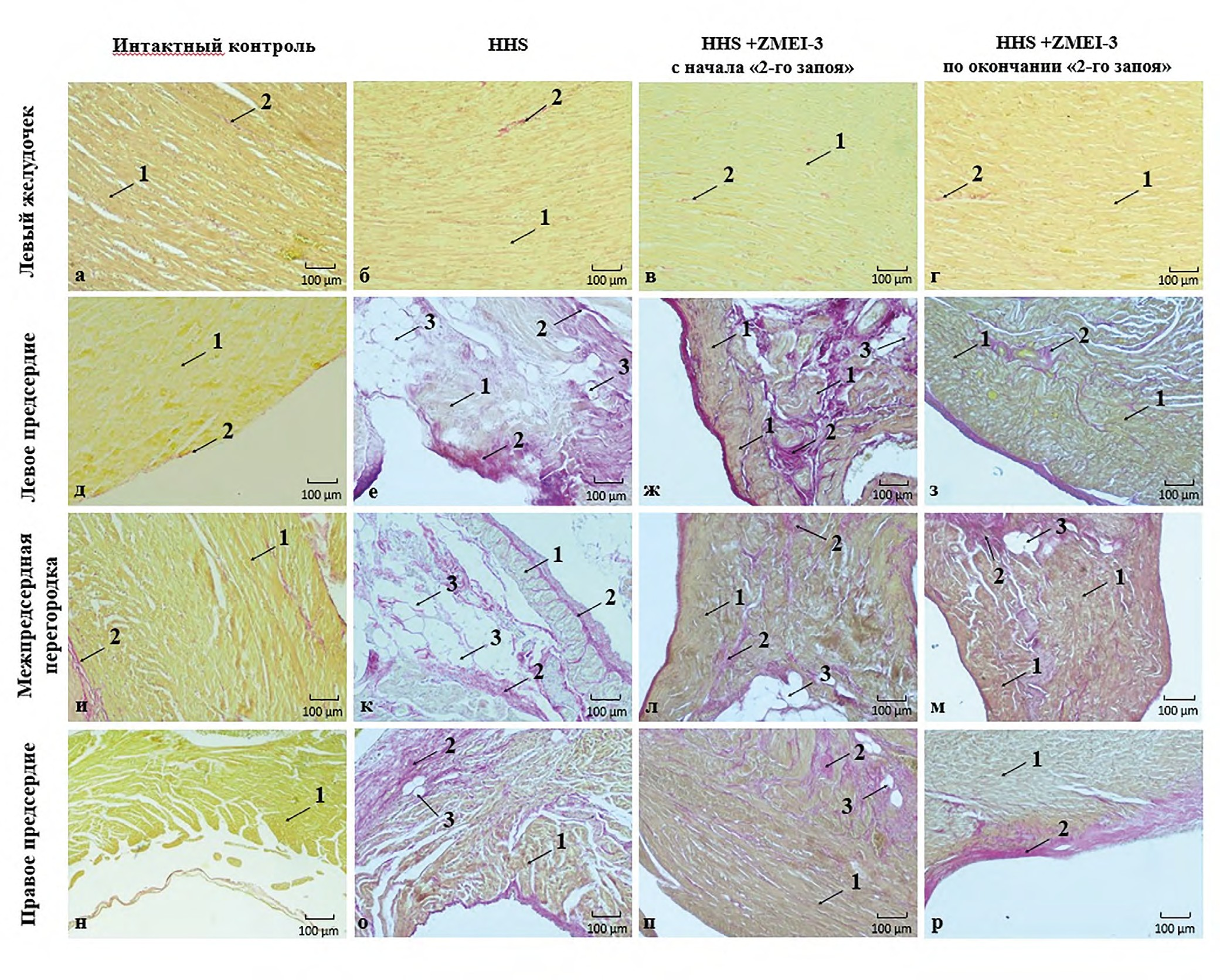
Objective. To study the potential use of Epac regulatory protein inhibitors to prevent alcohol-induced myocardial fibrosis.
Materials and Methods. To simulate holiday heart syndrome (HHS), rats were given a 10 % aqueous ethanol solution as the sole fluid source for 10 days, followed by drinking water for 10 days, and then a 10 % aqueous ethanol solution for the following 10 days. Connective tissue and adipose tissue density were assessed in histological preparations obtained from atrial, interatrial septal, and ventricular tissues stained with gallocyanin-eosin and picrofuchsin according to Van Gieson. A scoring system was used to quantify the intensity of the identified pathological changes.
Results. Following experimental therapy with ZMEI-3, the degree of connective tissue proliferation in the right atrium and interatrial septum in these animals was significantly lower than that observed in the control group (p = 0.0079 and p = 0.0013, respectively). The intensity of fatty deposits was significantly lower in the right and left atria (p = 0.035 and p = 0.0034, respectively).
Conclusion. Experimental therapy with ZMEI-3 in animals with HHS syndrome significantly reduced both the intensity of connective tissue and adipocyte deposits in atrial myocardium and interatrial septum, which may underlie the antiarrhythmic effect of the compound.
MECHANISM OF ACTION
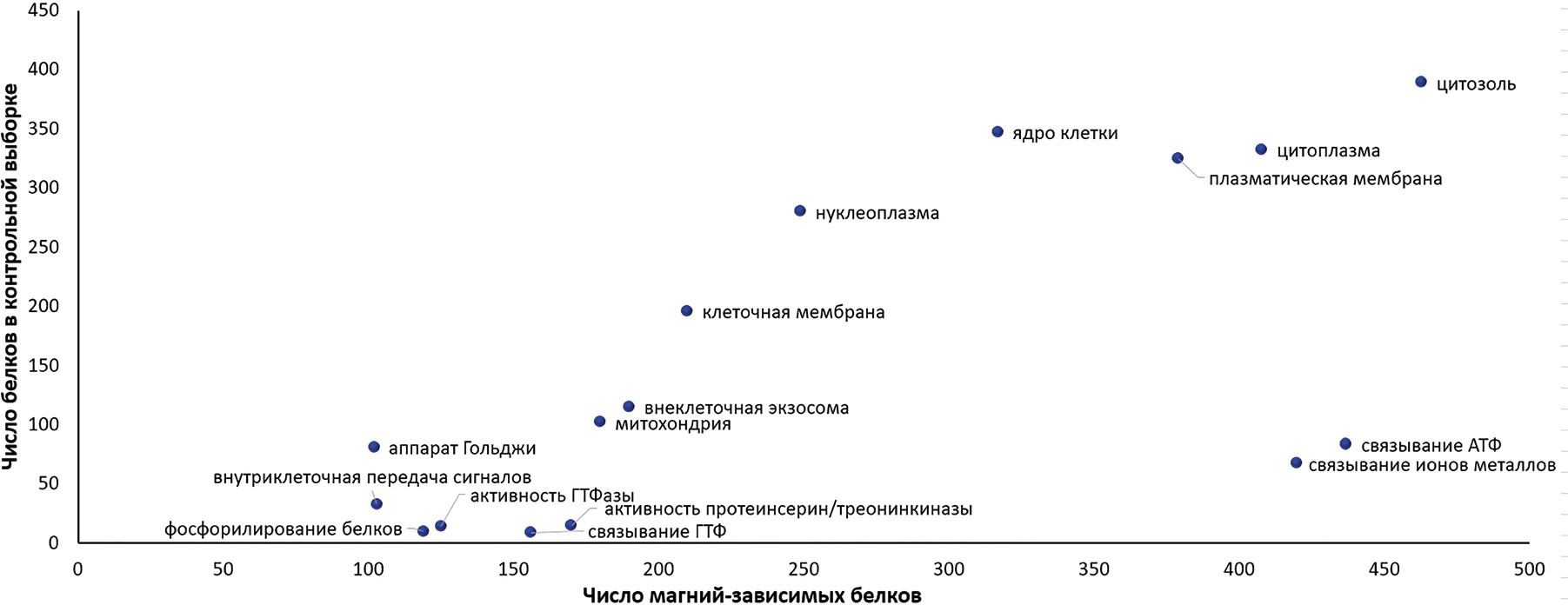
Background. Magnesium is one of the body's major cations. The exact number of proteins in the proteome whose activity is associated with magnesium is unknown.
Objective. To establish functional categories of magnesium-dependent proteins.
Materials and methods. A systems biology analysis was performed using original algorithms for recognizing and classifying magnesium-dependent proteins and a functional linkage method, taking into account protein annotations and Gene Ontology categories. Parametric and nonparametric tests, correlation analysis, and variance analysis were used to test statistical hypotheses.
Results. Analysis of protein functional categories revealed that 1,503 GO categories were associated with the biological functions of magnesium. A total of 172 magnesium-dependent proteins in the human proteome are involved in functional responses of the nervous system. These proteins are involved in neurotransmitter homeostasis, neuroplasticity, and neuronal survival.
Conclusion. The widespread presence of magnesium in the human proteome confirms its ubiquitous role in supporting physiological function under conditions of adequate supply of this essential element.
ORIGINAL EXPERIMENTAL RESEARCH
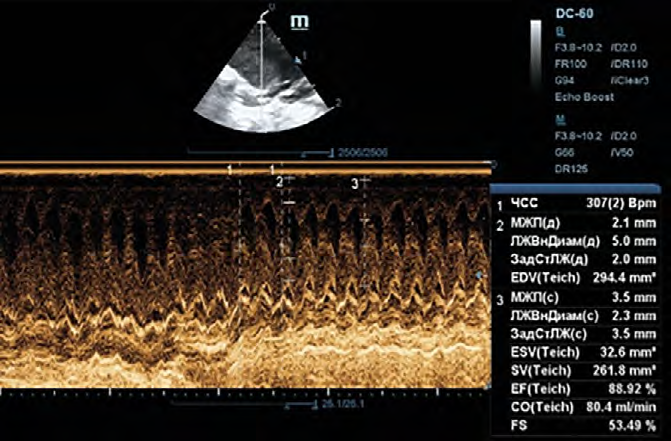
Objective. To study the features of changes in the geometry of the left ventricle of the heart and its inotropic function in the acute phase of myocardial infarction (MI) in rats with established alcoholic cardiomyopathy (ACMP).
Materials and methods. The experiments were carried out on a translational model of ACMP in rats that we developed, according to which this pathology is formed after 24 weeks of forced intake of 10 % ethanol solution. MI was reproduced by one-stage ligation of the descending coronary artery 1–2 mm below the place of its exit from under the left atrial appendage.
Results. It was shown that in rats with ACMP, already in the first minutes after the reproduction of acute myocardial infarction, the heart loses its physiological shape and becomes spherical. The change in the geometry of the heart occurs against the background of a significant (p = 0.001) decrease in the inotropic function of the left ventricle by ≈ 30 %, while in control animals the decrease is ≈ 15 %.
Conclusion. In animals with formed AKMP, myocardial infarction is more severe than in intact animals, in particular, they have a fairly high risk of developing an aneurysm of the left ventricle of the heart and, consequently, the risk of developing severe, progressive heart failure with a high probability of sudden cardiac death.
ANNIVERSARIES


ISSN 2686-8830 (Online)