

Contents
Scroll to:
 O. A. Gromova,
A. G. Kalacheva,
I. Yu. Torshin,
T. E. Bogacheva,
M. A. Rogozin,
T. R. Grishina,
L. E. Fedotova
O. A. Gromova,
A. G. Kalacheva,
I. Yu. Torshin,
T. E. Bogacheva,
M. A. Rogozin,
T. R. Grishina,
L. E. Fedotova https://doi.org/10.37489/2587-7836-2026-1-68-72
EDN: WXHJKM
Scroll to:
Background. Magnesium is one of the body's major cations. The exact number of proteins in the proteome whose activity is associated with magnesium is unknown.
Objective. To establish functional categories of magnesium-dependent proteins.
Materials and methods. A systems biology analysis was performed using original algorithms for recognizing and classifying magnesium-dependent proteins and a functional linkage method, taking into account protein annotations and Gene Ontology categories. Parametric and nonparametric tests, correlation analysis, and variance analysis were used to test statistical hypotheses.
Results. Analysis of protein functional categories revealed that 1,503 GO categories were associated with the biological functions of magnesium. A total of 172 magnesium-dependent proteins in the human proteome are involved in functional responses of the nervous system. These proteins are involved in neurotransmitter homeostasis, neuroplasticity, and neuronal survival.
Conclusion. The widespread presence of magnesium in the human proteome confirms its ubiquitous role in supporting physiological function under conditions of adequate supply of this essential element.
Gromova O.A., Kalacheva A.G., Torshin I.Yu., Bogacheva T.E., Rogozin M.A., Grishina T.R., Fedotova L.E. Functional categories of magnesium-dependent proteins. Pharmacokinetics and Pharmacodynamics. 2026;(1):68-72. (In Russ.) https://doi.org/10.37489/2587-7836-2026-1-68-72. EDN: WXHJKM
Magnesium is one of the body’s major electrolytes, fundamentally important for the vital activity of all cell types [1]. Magnesium ions are necessary for stabilizing the structure of the DNA double helix and the spatial structures of RNA.
The human proteome databases (NCBI PROTEIN, UNIPROT, Human Proteome Map, etc.) include more than 20,000 proteins [2]. The total number of proteins in the proteome whose activity is associated with the magnesium ion is unknown. Identifying magnesium-dependent proteins (MDPs) is important for determining the impact of this essential micronutrient on various body functions, including the functioning of the nervous system, and, consequently, for describing the spectrum of clinical applications of magnesium preparations [3].
The aim of this study is to establish the functional categories of magnesium-dependent proteins.
The stages of this study included original algorithms for the recognition, classification, and identification of magnesium-binding proteins in the human proteome [4]. Based on the concepts of elementary amino acid motifs, positional independence of motifs, heuristic assessment of informativeness, and solvability on sets of elementary motifs [5], algorithms were developed to compute sets of the most informative amino acid motifs, which are used for annotating protein functions [6]. The obtained lists of magnesium-dependent proteins were analyzed using the functional linkage method, which includes the analysis of data on the cellular roles of proteins [7]. To assess the functional categories of proteins, the information array of the international Gene Ontology (GO) nomenclature was used [8].
For statistical processing of the research results, the following were used: calculation of numerical characteristics of random variables, testing of statistical hypotheses using parametric and nonparametric criteria, correlation and dispersion analysis. Comparison of predicted and observed frequencies of the studied traits was performed using the chi-square test, the Wilcoxon–Mann–Whitney test, and Student's t-test. For statistical processing of the material, the STATISTICA 6.0 software package and Microsoft Excel spreadsheets were used.
Analysis of the functional categories of magnesium-dependent proteins according to the international Gene Ontology (GO) nomenclature (Fig. 1A) showed that, overall, 1,503 GO categories were associated with the biological functions of magnesium. The largest numbers of proteins were found in the GO categories "cytosol", "ATP binding", "metal ion binding", "cytoplasm", "plasma membrane", and "cell nucleus": each of these categories contains more than 300 "magnesium" proteins. From 100 to 250 magnesium-dependent proteins were represented in the GO functional categories "nucleoplasm", "cell membrane", "extracellular exosome", "mitochondrion", "protein serine/threonine kinase activity", "GTP binding", "intracellular signal transduction", and "Golgi apparatus".
In the case of proteins associated with nervous system functioning (Fig. 1B), the most represented categories were those describing structural components of neurons and their connections:
"dendrite" (n = 47)
"neuronal cell body" (n = 43)
"axon" (n = 36)
"synapse" (n = 32)
"receptor complex" (n = 31)
"synaptic vesicle" (n = 19)
"postsynaptic membrane" (n = 18)
From 10 to 24 proteins were represented in categories related to CNS development and neuroprotection:
"neurite outgrowth" (n = 24)
"axonogenesis" (n = 16)
"brain development" (n = 15)
"inhibition of neuron apoptosis" (n = 11)
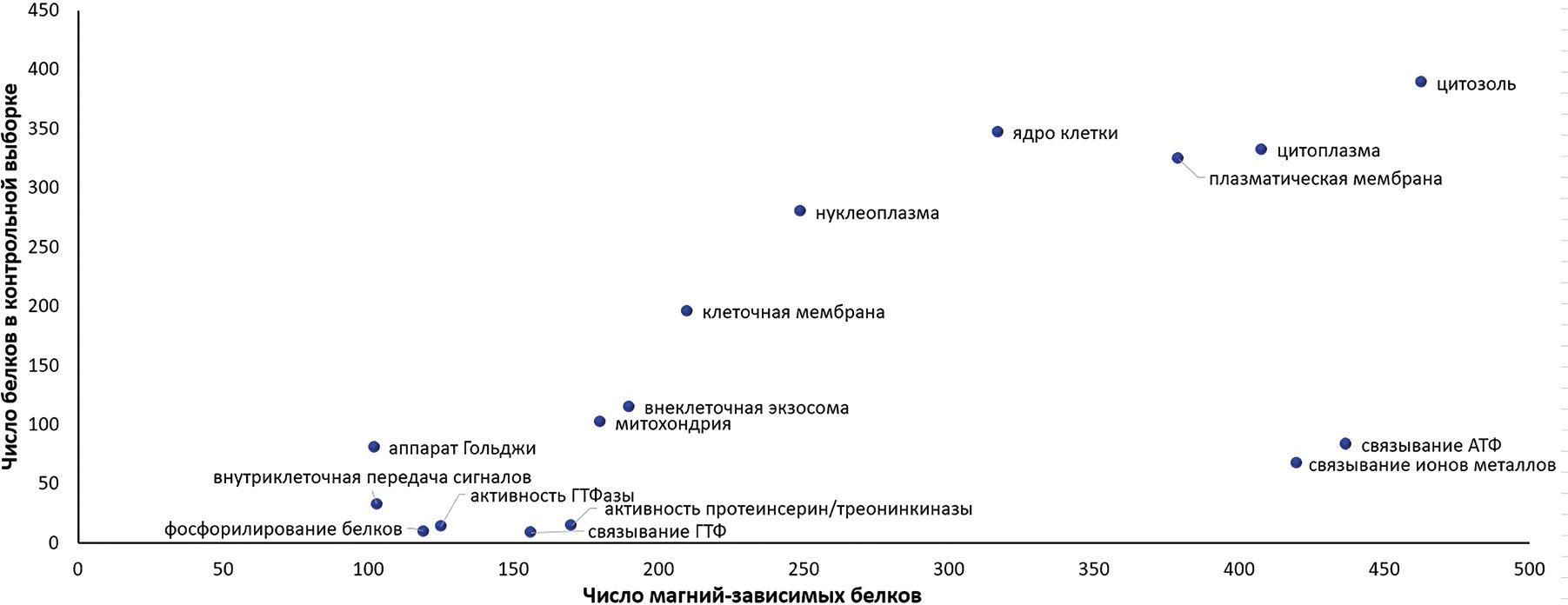
Fig. 1A. Gene Ontology (GO) categories of magnesium-dependent proteins. A) Main categories of magnesium-dependent proteins
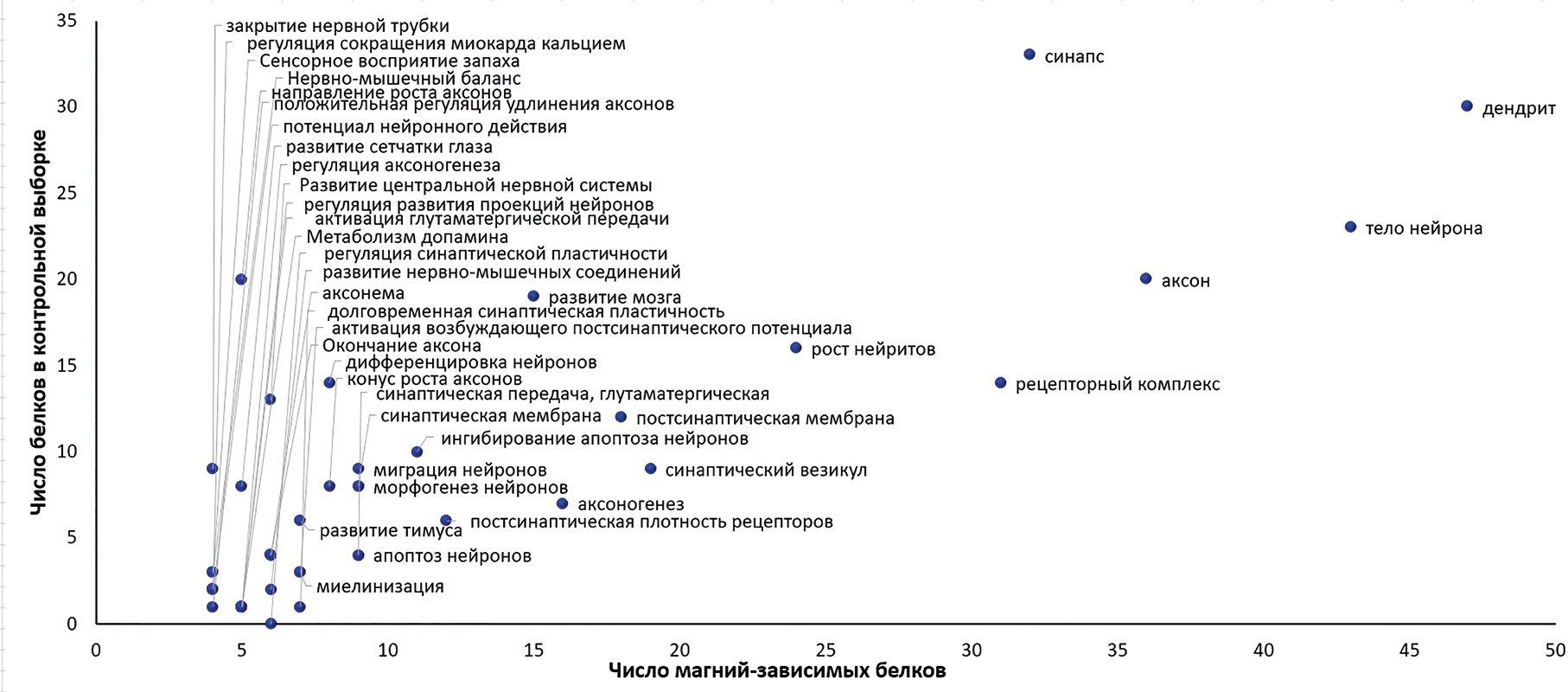
Fig. 1B. Gene Ontology (GO) categories of magnesium-dependent proteins. B) Protein categories related to nervous system function
Fewer than 10 magnesium-dependent proteins were included in each of the GO functional categories related to neuronal morphogenesis and migration (axon growth cone, neuron differentiation, axon terminus, myelination, axoneme, neuromuscular junction development, neuronal action potential, axon guidance, retina development, regulation of axonogenesis, regulation of neuron projection development, positive regulation of axon extension) and to synaptic signal transmission (glutamatergic synaptic transmission, synaptic membrane, long-term synaptic plasticity, activation of excitatory postsynaptic signal, regulation of synaptic plasticity, dopamine metabolism, regulation of myocardial contraction by calcium).
Overall, the analysis of protein functional categories showed that at least 172 magnesium-dependent proteins of the human proteome are involved in the implementation of neuroprotective, neurotrophic, and other "neurotropic" effects of the magnesium ion.
Such a wide representation of the element magnesium in the human proteome confirms its ubiquitous role in supporting the normal physiological state under conditions of normal physiological supply of this essential element [9]. The varying representation of magnesium-dependent proteins in the proteome indicates the priority of magnesium in supporting the functions of electrolyte metabolism [10], nerve signal conduction [11], regulation of myocardial contractility [12], and energy metabolism [13]. Due to the depletion of magnesium stores not only in bones and muscles [14] but also in the brain [15], a pathophysiological drift is formed, leading to mitochondrial dysfunction [16], accelerated aging, and multi-organ pathology [17].
In this study, a systems biology analysis of magnesium-dependent proteins was carried out in the context of their functional categories using modern mathematical methods of topological recognition theory. The study took into account the array of information available for magnesium-dependent proteins according to the international GO nomenclature.
Analysis of the functional categories of proteins showed that 1,503 GO categories were associated with the biological functions of magnesium. A total of 172 magnesium-dependent proteins of the human proteome are involved in the functional responses of the nervous system. These proteins are involved in neurotransmitter homeostasis, neuroplasticity, and neuronal survival. Some proteins may simultaneously participate in all of these neurophysiological processes.
1. Gromova OA. Physiological role and significance of magnesium in therapy (review). Therapeutic archive. 2004;76(10):58-62. (In Russ.). EDN: OKJSCB
2. Gromova OA. Magnesium and the «Diseases of Civilization». Gromova OA, Torshin IYu. Moscow: GEOTAR-Media. 2018. (In Russ.). ISBN 978-5-9704-4527-3.
3. Micronutrients in neurology: a guide. OA Gromova, IYu Torshin; Ed by EI Gusev. Moscow: GEOTAR-Media. 2026. (In Russ.). ISBN 978-59704-9109-6. doi: 10.33029/9704-9109-6-VKN-2026-1-984.
4. Torshin IYu. On solvability, regularity, and locality of the problem of genome annotation. Pattern Recognit. Image Anal. 2010;20:386-395. doi: 10.1134/S1054661810030156.
5. Rudakov KV, Torshin IYu. Analysis of the informativeness of motifs based on the solvability criterion in the problem of protein secondary structure recognition. Informatics and Applications. 2012;6(1):79-90. (In Russ.).
6. Torshin IYu. The study of the solvability of the genome annotation problem on sets of elementary motifs. Pattern Recognit. Image Anal. 2011;21:652-662. doi: 10.1134/S1054661811040171.
7. Torshin IYu (Ed Gromova OA). Sensing the change from molecular genetics to personalized medicine. Nova Biomedical Books, NY, USA, 2009, In «Bioinformatics in the Post-Genomic Era» series. ISBN 1-60692-217-0.
8. Ashburner M, Ball CA, Blake JA, et al. Gene ontology: tool for the unification of biology. The Gene Ontology Consortium. Nat Genet. 2000 May;25(1):25-9. doi: 10.1038/75556.
9. Gromova OA, Kalacheva AG. Torshin IYu, et al. Diagnostics of Magnesium Deficiency and Measurements of Magnesium Concentrations in Biosubstrates in Norm and in Various Pathologies. Kardiologiia. 2014;10:63-71. (In Russ.). EDN: SXZGGB
10. Torshin IYu, Gromova OA, Kalacheva AG, et al. Meta-analysis of clinical trials of cardiovascular effects of magnesium orotate. Terapevticheskii Arkhiv (Ter. Arkh.). 2015;87(6):88-97. (In Russ.). doi: 10.17116/terarkh201587688-97. EDN: UKTAXH
11. Gromova OA, Torshin IYu, Kalacheva AG, Kuramshina DB. Molecular-biological basics of neuroprotection effects of magnesium. S.S. Korsakov Journal of Neurology and Psychiatry. 2011;111(12):90-101. (In Russ.). EDN: PGEOEL
12. Gromova OA, Torshin IYu, Kalacheva AG, Grishina TR. On synergism of potassium and magnesium in maintenance of myocardial function. Kardiologiia. 2016;56(3):73-80. (In Russ.). doi: 10.18565/cardio.2016.3.73-80. EDN: VSYWPT
13. Zangieva ZK, Torshin IYu, Gromova OA, Nikonov AA. Trace elements in the nervous tissue and ischemic stroke. S.S. Korsakov Journal of Neurology and Psychiatry. 2013;113(3-2):30-36. (In Russ.). EDN: PYLYWX
14. Gromova OA, Nikonov AA. The role and significance of magnesium in the pathogenesis of diseases of the nervous system. S.S. Korsakov Journal of Neurology and Psychiatry. 2002;102(12):45. (In Russ.). EDN: VDJKNE
15. Gromova OA. Neurotrophic system of the brain: neuropeptides, macroand microelements, neurotrophic drugs. Lecture. International Neurological Journal. 2007;(2): 94-104. (In Russ.). EDN: PFKIIN
16. Gromova OA, Torshin IYu, Rudakov KV, et al. Systematic analysis of magnesium dependent mitochondrial proteins. Kardiologiia. 2014;54(9):86-92. (In Russ.). EDN: SXWQVT
17. Garanin AA, Gromova OA, Bogacheva TE. Experimental models of aging. Farmakokinetika i farmakodinamika = Pharmacokinetics and pharmacodynamics. 2024;(4):17-21. (In Russ.). doi: 10.37489/2587-78362024-4-17-21. EDN: VMQTRD
Olga A. Gromova — Professor of the Department of Pharmacology FSBEI HE «Ivanovo SMU» of MOH of Russia; PhD, Dr. Sci. (Med.), Professor, Leading researcher FRC CSC RAS.
Ivanovo, Moscow
Alla G. Kalacheva — PhD, Cand. Sci. (Med.), Associate Professor of the Department of Pharmacology of the FSBEI HE «Ivanovo SMU» of MOH of Russia.
Ivanovo
Ivan Yu. Torshin — PhD, Cand. Sci. (Physics and Mathematics), Cand. Sci. (Chemistry), Leading researcher FRC CSC RAS.
Moscow
Tatiana E. Bogacheva — PhD, Cand. Sci. (Med.), Associate Professor of the Department of Pharmacology of the FSBEI HE «Ivanovo SMU» of MOH of Russia.
Ivanovo
Mikhail A. Rogozin — Postgraduate student of the Department of Pharmacology of the FSBEI HE «Ivanovo SMU» of MOH of Russia.
Ivanovo
Tatiana R. Grishina — PhD, Dr. Sci. (Med.), Professor, Нead of the Department of pharmacology, FSBEI HE «Ivanovo SMU» of MOH of Russia.
Ivanovo
Lyubov E. Fedotova — PhD, Cand. Sci. (Med.), Associate Professor of the Department of Pharmacology, FSBEI HE «Ivanovo SMU» of MOH of Russia.
Ivanovo
Gromova O.A., Kalacheva A.G., Torshin I.Yu., Bogacheva T.E., Rogozin M.A., Grishina T.R., Fedotova L.E. Functional categories of magnesium-dependent proteins. Pharmacokinetics and Pharmacodynamics. 2026;(1):68-72. (In Russ.) https://doi.org/10.37489/2587-7836-2026-1-68-72. EDN: WXHJKM
НАШИ КНИГИ



Другие журналы
"Издательства ОКИ"


ПАРТНЕРЫ

 Email this article (Login required)
Email the author (Login required)
Email this article (Login required)
Email the author (Login required) Editorial address:
121357, Moscow, st. Vatutina, 4, building 2, apt. 22
General Director of OKI Publishing House LLC
Afanasyeva Elena
Tel. + 7 (916) 986-04-65; Email: eva88@list.ru
Processing of personal data


